Mosambi Juicer for Home: Electric vs Manual Citrus Juicer
For a lemon or two a day, a manual squeezer is enough; for mosambi or orange juice most mornings, an electric citrus juicer saves the effort. Here is how the types compare and what to check before you buy.
In this guide
This guide is about juicers for citrus fruit: mosambi, oranges and lemons. For smoothies and mixed-fruit juice, see how to choose a portable juice maker.
For a lemon or two a day, a manual citrus squeezer is enough. If you make orange or mosambi juice for the family most mornings, an electric citrus juicer is the easier choice: a motor turns the cone, so you only set the fruit in place.
Types of citrus juicer for home
| Type | How it works | Good for | Needs power? |
|---|---|---|---|
| Two-handled hand squeezer | Put a half in the cup and press the handles together | Lemons and limes for nimbu pani or cooking | No |
| Cone squeezer (reamer) | Press a half onto a ridged cone and twist it by hand | A glass of orange or mosambi juice now and then | No |
| Lever hand press | Pull a lever down to press a half in a cup | Several oranges or mosambi without electricity | No |
| Electric citrus juicer (plug-in) | A motor turns the cone while the half sits on it | Juice most days, near a socket | Yes, a socket |
| Rechargeable electric citrus juicer | The same, running on a built-in battery | Juice most days, anywhere on the counter or in the office | A USB charge |
A mixer grinder, a blender or a juicer machine for mixed fruit is not a citrus juicer. You can make mosambi juice in a mixer if you peel the fruit and strain the juice, but a citrus juicer works on halves with the peel on, so the peel stays out of the juice.
Manual mosambi juicer: when it is enough
- There is no motor, no charging and no socket to think about.
- It is small, and there are only one or two parts to wash.
- It suits lemons, and the occasional glass of mosambi or orange juice.
- The catch: every fruit takes hand pressure or twisting. For a family's morning juice, that adds up.
Electric mosambi juicer: when it is worth it
- The motor turns the cone; you set the fruit in place and let it work.
- It is easier when you juice several fruits at once, or for anyone in the family who finds gripping and twisting hard.
- A plug-in model needs a socket nearby. A rechargeable one can sit anywhere, but it needs charging.
- The catch: there are more parts to wash, the motor base must stay dry, and it makes some motor sound while it runs.
Electric vs manual citrus juicer at a glance
| Manual squeezer or press | Electric citrus juicer | |
|---|---|---|
| Effort per fruit | Your hand presses or twists | The motor turns the cone |
| Power | None | A socket, or a USB charge for rechargeable models |
| Washing | One or two parts | Cone, cup and cover come off; the motor base is wiped, not washed |
| Sound | Silent | Motor sound while running |
| Best for | Lemons, or a glass now and then | Orange or mosambi juice most days, for more than one person |
What to check before you buy a mosambi juicer
- Fruit size: a mosambi or orange half should sit on the cone, and under the cover if there is one. Small lemon squeezers are too small for big fruit.
- Strainer: look for slots or holes that let the juice through and hold back seeds.
- Pouring: a spout on the cup lets you pour without lifting parts off.
- Parts that come apart: fewer hidden corners means less dried pulp.
- Stable base: it should not slide on the counter while you juice.
- Power: corded or rechargeable. For a rechargeable model, check how it charges and with which cable.
The JIKRA rechargeable citrus juicer
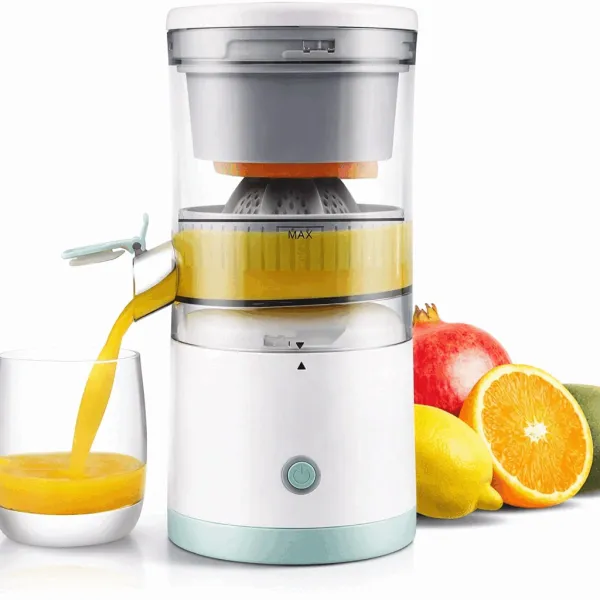
The JIKRA rechargeable citrus juicer is an electric cone juicer that charges with a USB cable and runs without a cord. Set a halved fruit on the juicing cone, fit the cover and press the single button on the base. The juice collects in a clear cup with a MAX line and pours out through a spout with a flip tab. The cover, juicing head and cup lift off the main body for washing. It is made for halved citrus fruit: oranges, lemons and limes. See more kitchen appliances.
Making the juice
For step-by-step methods with an electric juicer, a hand press or a mixer, and how to stop mosambi juice turning bitter, read how to make mosambi juice at home.
FAQs
Which juicer is best for mosambi at home?
It depends on how often you make juice. For a glass now and then, a cone squeezer or a lever press big enough for an orange-size half is enough. For juice most mornings, or for the whole family, an electric citrus juicer saves the hand work.
Is an electric citrus juicer better than a manual one?
Not always. An electric juicer takes the effort out of juicing several fruits. A manual squeezer needs no power, is quicker to wash and is enough for a lemon or two.
Which manual juicer is good for mosambi?
A cone squeezer or a lever hand press that takes an orange-size half. Small two-handled squeezers are made for lemons and limes.
Does an electric citrus juicer need a plug point?
A plug-in model does. A rechargeable model runs without a cord once it is charged.
Can a citrus juicer make apple or carrot juice?
No. A citrus juicer only works on halved citrus fruit. Hard fruit and vegetables need a juicer machine or a blender.
Is a mixer the same as a juicer for mosambi?
No. A mixer blends the whole segments, so you have to peel the fruit, remove the pith and seeds, and strain. A citrus juicer presses the juice out of a half, and the peel stays on the cone.
How do I clean a citrus juicer?
Rinse the cone, strainer, cup and cover soon after use, before the pulp dries. On an electric juicer, wipe the motor base with a damp cloth and keep the charging port or plug dry.
What is a citrus juicer machine?
It is a juicer made for citrus fruit cut in half. The half sits on a ridged cone, and the cone (or your hand) turns or presses it so the juice runs out and the peel stays behind.